
AI Drives Job Growth and Wage Premiums Across All Sectors
Artificial Intelligence (AI), once seen as a job disruptor, is now emerging as a catalyst for employment and economic advancement across multiple sectors. As AI technologies mature, they are not only enhancing productivity but also creating new roles, driving demand for digital skills, and offering wage premiums for those equipped to work alongside intelligent systems.
Transforming Industries, Not Replacing Them
Contrary to fears of mass unemployment, recent data suggests AI is transforming rather than replacing industries. Sectors such as healthcare, finance, manufacturing, retail, logistics, and education are integrating AI to streamline operations, improve decision-making, and unlock new value streams. This integration requires a hybrid workforce—one where humans and machines collaborate.
In healthcare, AI is enabling faster diagnostics, personalized treatments, and predictive analytics—driving demand for data analysts, AI system integrators, and tech-savvy medical professionals. Similarly, financial institutions are leveraging AI for fraud detection and customer insights, creating roles for AI product managers, cybersecurity experts, and automation engineers.
Job Creation in Unexpected Areas
AI has fueled growth in jobs that didn’t exist a decade ago: prompt engineers, AI ethicists, machine learning operations (MLOps) engineers, and data translators. Even non-technical roles are evolving; marketers, educators, and designers are increasingly using AI tools to enhance creativity and personalization.
Meanwhile, traditional roles are being augmented rather than eliminated. A factory technician, for example, might now operate and maintain AI-powered robots—demanding a new blend of mechanical and digital skills.
Wage Premiums for AI Skills
One of the most notable trends is the wage premium associated with AI competencies. Employees who can integrate AI into their workflows or develop AI-enabled solutions are commanding higher salaries across sectors. According to global hiring platforms, AI-skilled professionals earn up to 20–40% more than their peers in equivalent roles without AI expertise.
This wage premium is especially evident in roles such as software development, analytics, cybersecurity, and digital marketing—fields where AI proficiency enhances output and strategic impact.
The Skills Shift: Lifelong Learning is Key
To keep pace with AI-led job creation, the focus is now on reskilling and upskilling. Organizations and governments are investing heavily in workforce development through online platforms, bootcamps, and AI literacy programs. Workers are increasingly expected to develop hybrid skills—combining domain expertise with digital literacy and problem-solving abilities.
AI-related skills in highest demand include:
- Machine learning and deep learning
- Data visualization and analytics
- Cloud computing
- Python, SQL, and R programming
- Ethical AI and governance frameworks
A Future of Collaborative Intelligence
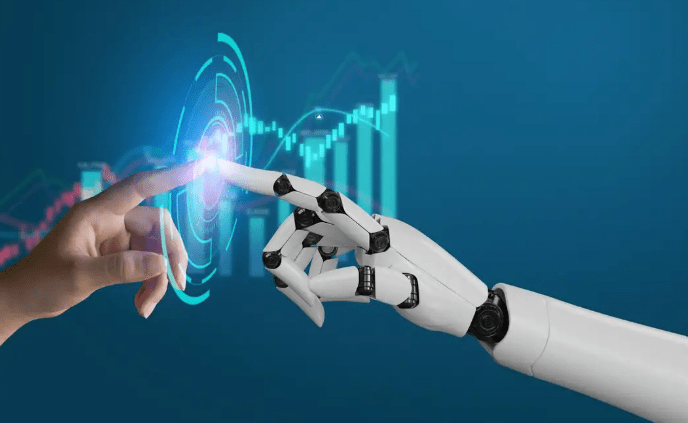
As AI continues to permeate all aspects of work, the future will not be about human vs. machine—but human with machine. The next wave of productivity will come from systems that augment human capabilities, not eliminate them.
Organizations that embrace this paradigm shift will not only attract top talent but also thrive in the AI-enabled economy. The message is clear: AI is not just automating jobs—it’s amplifying human potential and driving a new era of inclusive economic growth.