
OKRs vs KPIs: Finding the Right Balance for Business Success
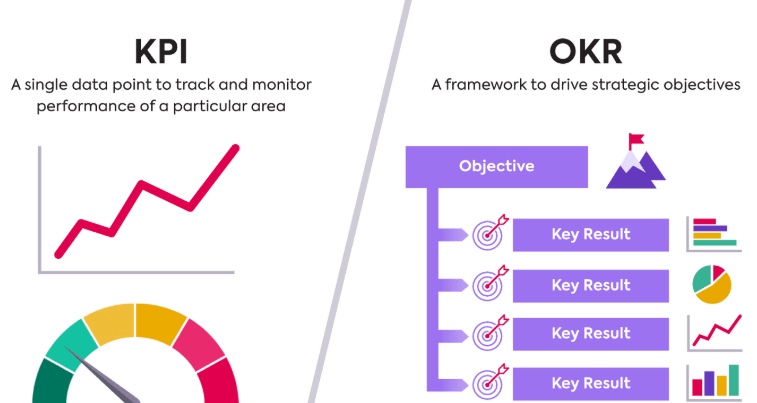
Every organization wants to measure progress and achieve results, but not all measurement frameworks are created equal. Two of the most popular performance management tools are OKRs (Objectives and Key Results) and KPIs (Key Performance Indicators). At first glance, they may seem similar, but their purposes and impacts differ greatly. Understanding how to use them effectively—and in balance—can make the difference between hitting targets and truly driving transformation.
Why OKRs Matter
OKRs are about setting bold goals and stretching the limits of what’s possible. They encourage teams to think bigger and innovate, rather than simply maintain the status quo. OKRs are not just about hitting numbers; they’re about aligning the team around a shared vision.
For example, if a company wants to “become a leader in customer experience,” the OKRs could include reducing churn rates, improving customer feedback scores, and launching new engagement features. The idea is to inspire teams to reach beyond ordinary performance levels.
Why KPIs Matter
KPIs, on the other hand, are about stability, consistency, and tracking performance against established benchmarks. They show whether the business is healthy and whether day-to-day operations are running smoothly.
A retail business, for instance, might use KPIs like monthly sales volume, average order value, and repeat purchase rate to assess ongoing success. Without these indicators, it would be difficult to know if the business is moving in the right direction.
The Risk of Choosing One Over the Other
- Relying only on KPIs can make teams overly focused on maintaining current performance without striving for growth or innovation.
- Relying only on OKRs can create ambitious goals but leave teams without the stability and measurement framework needed to sustain long-term progress.
The Power of Combining OKRs and KPIs
The real magic happens when businesses use OKRs and KPIs together. KPIs give a clear picture of performance health, while OKRs drive forward-looking innovation. For example:
- A KPI might show that customer retention is at 75%.
- An OKR might set the goal to raise that retention rate to 90% by the next quarter.
Here, KPIs act as the baseline, and OKRs push the team to improve.
Which Should Your Team Use?
- Use OKRs when you want to create energy, focus, and alignment around strategic goals.
- Use KPIs when you need to track ongoing operations, ensure accountability, and measure efficiency.
- Use both when you want a balanced framework that provides visibility into current performance while pushing the boundaries of growth.
Conclusion
OKRs and KPIs are not competitors—they are complementary tools. While KPIs keep your business grounded, OKRs push your team to aim higher. For any team looking to thrive in today’s competitive environment, finding the right balance between the two is the key to long-term success.